

Because weddings have been around for, basically forever, there are so many traditions and customs that have evolved to fit different times. Here are some of our favorite wedding traditions, where they originated from, and how you can put a modern twist on them.
Something Old, Something New, Something Borrowed, and Something Blue
Something old is usually something belonging to a grandparent or parent and shows the continuity of family. Although the bride is ‘leaving’ her old family behind, she’s saying that she will always remember them. Something new represents the new life the bride is entering and the hope for success and good fortune, while something borrowed often comes from a family member or a happy bride and is supposed to pass on good luck. The item must be given back or bad luck will follow. Blue is a sign of fidelity and constancy, so something blue stems from the custom of wearing a blue ribbon in a bride’s hair, which began in ancient Israel and symbolized fidelity.Best Man
As marriages were historically accomplished by capture (the groom would kidnap the woman), a warrior friend was often employed. This Best Man would help the groom fight off other men who wanted the captured woman, and would also help in preventing the woman’s family from finding the couple.Bridal Party
When I think of bridal party traditions, my mind always reverts to The Office, when Mose abducts Angela during her bachelorette party. Although this tradition isn’t as common these days, they were a popular thing to do during the Anglo-Saxon days. The abductees were called the “brideknights,” also known as the “bridesmen.” The abductions weren’t nearly as abrupt as Mose’s, and the bridesmen made sure the bride was taken care of during and after the ceremony, with the help of the brideswomen. Because evil spells were a big suspicion back then, the brideswomen would dress in the same clothes as the bride, so that the evil spirits wouldn’t know who to land on. Although brides often stand out more than her bridesmaids in today’s traditional weddings, the bridesmaids still often dress in similar clothing.Bridal Bouquet
Flowers played an extremely important role in olden times; the smell of the flowers were believed to ward off evil spirits and bring good fortune. During the plague in England, people used to wear pouches of flower petals around their necks, so that they wouldn’t be infected with the Plague, which was believed to be carried by strong, bad smells. When the bride throws her bouquet, it symbolizes spreading the bride’s good luck. As most of us know, whoever catches the bouquet, is rumored to be the next to marry. Choosing flowers for the bridal and bridesmaid bouquets are often a big deal at most weddings; choosing what flowers look best with each other can be stressful. Personally, I’ve always found more beauty in things that mean something to me, so, maybe, knowing what different flowers represent can make it easier to choose what your wedding flowers will be. Here are some examples of flowers and what they symbolize: Apple blossom – good fortune, Aster – daintiness, symbol of love, Bluebells – everlasting love, Blue Violets – faithfulness, Carnation White – honesty, Daisies White – loyalty/innocence, Forget-me-nots -true love, Gardenias – joy, Iris – wisdom, Ivy – fidelity, Lilies – innocence & purity, Lily of the Valley – happiness, Orange blossoms – fertility & purity, Orchids – beauty, Red Rose – passion/beauty.Groom’s Flower
The Groom often wears one of the flowers that appears in the Bridal Bouquetin his buttonhole. This stems from the medieval tradition of a Knight wearing his Lady’s colors as a declaration of his love.White Wedding Dress
Anne of Brittany made the white wedding dress popular in 1499. Before that, a woman just wore her best dress. Despite what most people believe, a white wedding dress is in no way indicative of the “purity” of the bride-to-be, but is actually a symbol of joy.Bridal Showers
Bridal Showers weren’t originally called Bridal Showers, until the 1890’s, when a bride’s friend placed small gifts into a parasol and opened it over the bride’s head, so that she would be showered with gifts. When people heard of this, they were intrigued with the idea and began doing it at their own bridal parties. However, before this tradition, bridal parties were organized to strengthen friendships between the bride and her friends and to help the bride prepare for her wedding, both physically and mentally.Bachelor Party
Ancient Spartan soldiers were the first to hold stag parties. The groom would feast with his male friends on the night before his wedding. In this event he would say good-bye to the carefree days of bachelorhood and swear continued allegiance to his comrades.Seating
The bride’s family sits on one side of the church whilst the groom’s family sits on the other. This goes back to the time when a girl of one tribe would be offered by her father as a peace offering to another tribe. The tribes had to be kept separate in case someone started a fight.Wedding
The word “wedding,” stems from the root term meaning “to gamble” or “to wager,” which is appropriate in the olden times, since brides were often exchanged for land, political alliance, social status and/or currency. A wedding back then, was often viewed as more of a business deal, rather than something that both the bride and groom wanted to have occur.Veil
Although they still occur, arranged marriages used to be much more common than they are now. Back then, the groom wouldn’t be allowed to see the bride until they were about to get married, for the fear of the groom not agreeing to marry the bride if he were to see her. Because of this, the veil hid the bride, until the groom lifted the veil to see his wife-to-be for the first time.Wedding Bands
It is unknown when wedding bands were first worn. As far back as the ancient Romans, there was a belief that the vein in the fourth finger ran directly to the heart, so the wearing of rings on that finger joined the couple’s hearts and destinies.Wedding Cake
Like most any other ritual handed down from the ages, a wedding wouldn’t be complete without fertility symbols, like the wedding cake. Ancient Romans would bake a cake made of wheat or barley and break it over the bride’s head as a symbol of her fertility. (Whether this meant cracking the cake above the bride’s head or actually bonking her on the noggin with it is rather unclear. We’re not sure we want to know…) Eventually, it became a tradition to stack several cakes atop one another, as tall as possible. The bride and groom would then be charged to kiss over this tower without knocking it over and if they were successful, they were promised a lifetime of good fortune. During the reign of King Charles II of England, it became customary for cake to be a palatable palace iced with sugar, which is why it is customary in just about every wedding.Garter Toss/Bouquet Toss
In the 14th century, it was customary for the bride to toss her garter to the men, but sometimes the men got too drunk, and would become impatient and try to take the garter off her ahead of time. (Eventually the groom got into the act and saved his bride from the unruly mob…we hope). All the same, it got to less trouble for her to toss her bridal bouquet instead.The Send-Off
In Pagan times, rice and grain were thrown at the bride and groom after their ceremony, representing fertility and continuity. However, birds would eat these grains and get sick from them, so it is not as popular of a tradition these days. However, some of our favorite send-off moments include the guests throwing flower petals, holding sparklers, releasing sky lanterns (like Tangled), holding small candles, blowing bubbles, or having the guests set off confetti poppers.Shoes on the Bumper
Tying shoes to the bumper of the car represents the symbolism and power of shoes in ancient times. Egyptians would exchange sandals when they exchanged goods, so when the father of the bride gave his daughter to the groom, he would also give the bride’s sandals to show that she now belonged to the groom. In later times, people would throw shoes at the couple. Now, thankfully, folks just tie shoes to the new couple’s car and many people use this as a symbol of the bride and groom finally ‘tying the knot.’ Some other things that we’ve seen people put on the back of their cars include empty tin cans (be careful if you do this) and photos. Many people also decorate cars in markers, streamers, and photos, as well.Honeymoon
Following the abduction, the groom would put himself and his bride into hiding – the Honeymoon– so that by the time the bride’s family found them, the bride would already be pregnant. But today, honeymoon’s are often meant more for enjoyment, relaxation, and celebration.Found this helpful?
Share this article with other couples planning their wedding!
More Articles
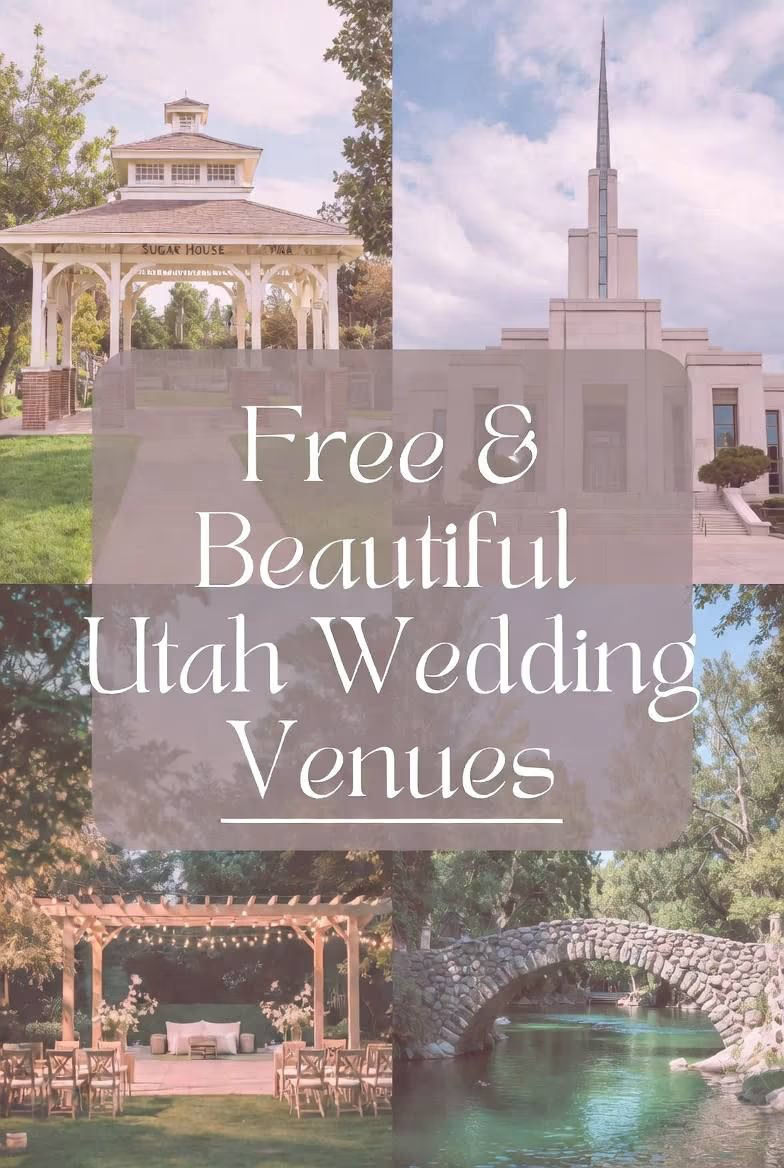
Can You Get Married in Utah for Free?
The venue is probably going to be your biggest expense. Around $8,000 to $12,000 for a reception venue alone along the Wasatch Front. But there are genuinely beautiful places in Utah that cost nothing or close to nothing.
Apr 17, 2026

3 Insider Secrets to Planning a Seamless Utah Wedding in 2026
Apr 9, 2026

Fresh, Romantic & In Bloom: Spring 2026 Wedding Trends
Spring provides the perfect backdrop for your wedding! Beautiful bright colors, and great scenery just for your perfect day!
Apr 6, 2026
Get More Wedding Tips
Subscribe to our newsletter for weekly wedding planning tips, vendor spotlights, and exclusive deals.